


Life Insurance:
Life insurance is an important part of financial planning because it provides financial protection against one of life’s biggest uncertainties—the loss of an earning member.
While no financial product can replace a loved one, an appropriate life insurance policy can provide financial support to the family and help protect important financial goals.
Life insurance can be useful for individuals with dependents, outstanding loans, children’s education responsibilities, business obligations, or long-term family commitments. However, choosing the right policy requires an understanding of different types of life insurance, their features, costs, benefits, and limitations.
This guide explains the importance of life insurance and the major types of life insurance policies, helping individuals understand how life insurance can fit into a comprehensive financial plan.
Importance of Life Insurance:
Life insurance is a contract between an insurance company and the policyholder. In return for the applicable premium, the insurer provides benefits according to the policy terms and conditions. Depending on the type of policy, benefits may be payable upon the death of the insured person, survival to a specified period, maturity, or other events covered under the policy.
The fundamental purpose of life insurance is financial protection.
Some life insurance products may also provide savings or investment-related features, but these products should be evaluated separately based on their specific structure, costs, guarantees, risks, and benefits.
1. Financial Protection for the Family
The primary reason for purchasing life insurance is to protect dependents financially. If an earning member dies prematurely, the family may lose a significant source of income. A suitable life-insurance benefit can provide financial support to help the family manage regular expenses and future obligations.
This can be particularly important for families with young children, dependent parents, or a non-earning spouse.
2. Protection of Future Financial Goals
Families often have important long-term goals such as:
- Children’s education
- Marriage expenses
- Home ownership
- Retirement planning
- Business succession
- Debt repayment
The premature death of an earning member can disrupt these goals. Appropriate life insurance can provide financial support that helps the family continue working toward these objectives.
3. Protection Against Outstanding Loans
Home loans, education loans, business loans, and other liabilities can continue even after the borrower’s death, depending on the loan structure and applicable arrangements.
Life insurance can help provide funds to the nominee, which may be used toward eligible financial obligations. The appropriate coverage should be evaluated after considering existing liabilities and other assets.
4. Income Replacement
For a family that depends substantially on one person’s income, life insurance can function as a form of income-replacement protection. The coverage amount should be sufficient to address the family’s financial needs rather than being selected arbitrarily.
Income, age, dependents, liabilities, existing assets, inflation, and future goals should all be considered when determining appropriate coverage.
5. Financial Security for Children
Parents often want to ensure that their children’s education and future opportunities remain protected even if something happens to them. Adequate life insurance can provide financial support that may help preserve important goals such as higher education.
Life insurance should therefore be considered as part of a broader family financial plan.
6. Business and Profession Protection
Business owners and partners may also have life-insurance requirements. Depending on the business structure and applicable regulations, insurance may be used as part of business continuity or succession planning.
Specific arrangements should be designed with appropriate legal, tax, and professional advice.
Types of Life Insurance Policies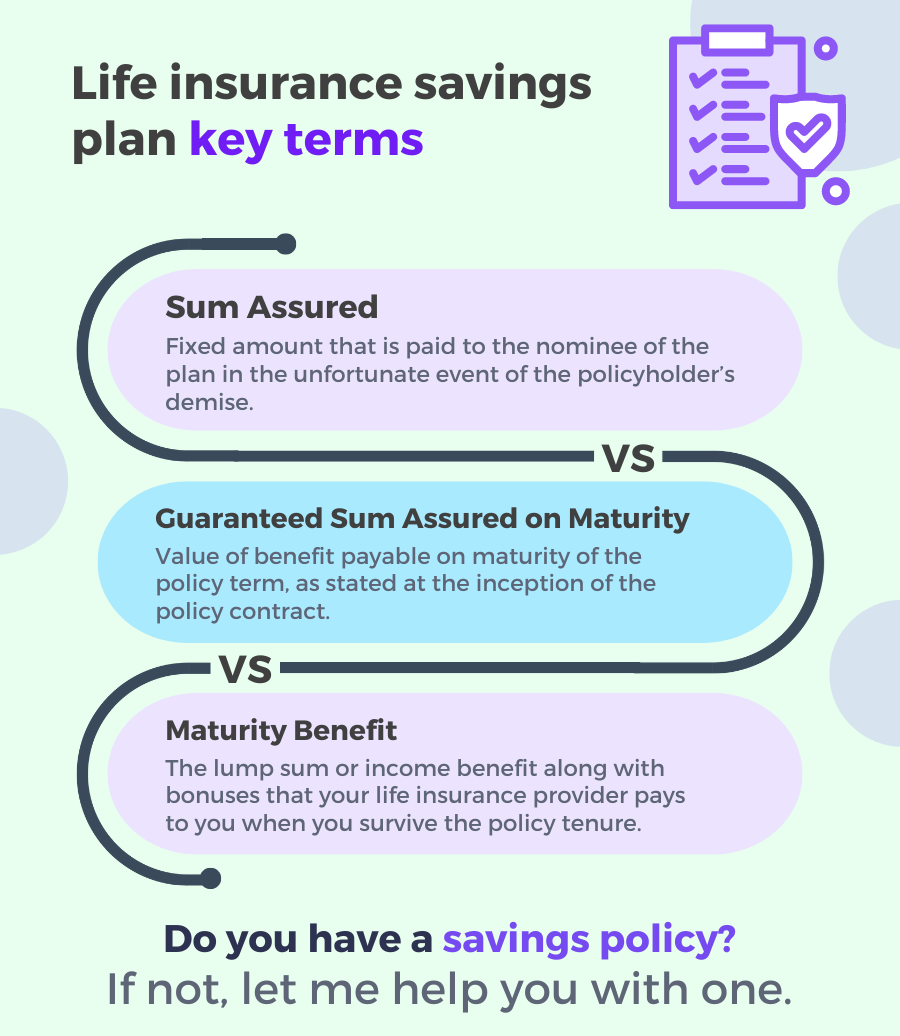
Life insurance products can be broadly categorized according to their purpose and benefit structure.
1. Term Insurance
Term insurance is primarily designed to provide life cover for a specified period. If the insured person dies during the policy term, the applicable death benefit is paid to the nominee, subject to the policy terms and conditions.
Term insurance generally focuses on protection rather than savings or investment returns.
Key Features
- High life cover may be available for a comparatively affordable premium.
- Coverage is provided for a defined period.
- Premium depends on factors such as age, health, coverage, policy term, and underwriting.
- It generally does not build a traditional maturity corpus in a standard pure-term structure.
Term insurance can be particularly relevant for individuals with significant financial responsibilities.
2. Whole Life Insurance
Whole life insurance is designed to provide coverage for a very long period, potentially extending throughout the insured person’s lifetime, subject to the policy terms.
Depending on the product, it may include savings or cash-value-related features. It can be considered for individuals who want long-duration protection and may also have estate or legacy-planning objectives.
Because whole-life products can differ significantly, prospective policyholders should carefully review the benefit structure, premiums, guarantees, exclusions, surrender provisions, and other terms.
3. Endowment Plans
An endowment policy combines life insurance protection with a savings-oriented structure. Typically, the policy provides a death benefit if the insured dies during the policy term and a maturity benefit if the insured survives until the end of the policy term, subject to the product’s terms.
Endowment plans may appeal to individuals who prefer a structured, long-term savings approach combined with life protection. Before purchasing, investors should carefully evaluate:
- Guaranteed benefits
- Non-guaranteed benefits
- Premium commitment
- Policy duration
- Maturity value
- Surrender conditions
- Liquidity
- Applicable taxation
The expected benefits should be understood clearly rather than assuming that all benefits are guaranteed.
4. Money-Back Life Insurance Plans
Money-back policies are designed to provide periodic survival benefits during the policy term, along with life insurance protection. The policy may provide specified amounts at predetermined intervals if the insured survives the applicable period, while the death benefit is payable according to policy conditions.
These products may be suitable for individuals who prefer a combination of protection and periodic benefits.
However, the policy’s actual benefit schedule, premium, exclusions, maturity benefits, and other conditions should be carefully examined before purchase.
5. Unit Linked Insurance Plans (ULIPs)
A Unit Linked Insurance Plan (ULIP) combines life insurance protection with market-linked investment. A portion of the premium is allocated toward life-insurance-related costs and other charges, while the remaining amount is invested in selected investment funds according to the policy structure.
- ULIPs may provide access to different investment funds, potentially including equity, debt, or balanced options.
- Because investment values are market-linked, returns are not guaranteed and the policyholder bears investment risk.
ULIPs should be evaluated based on:
- Investment objective
- Risk profile
- Fund choices
- Charges
- Lock-in provisions
- Policy duration
- Insurance coverage
- Liquidity
- Investment horizon
ULIPs are generally more complex than pure term insurance and should be understood thoroughly before purchase.
6. Child Insurance Plans
Child-oriented insurance plans are designed to support financial planning for children’s future needs, particularly education and other long-term goals.
Depending on the product, the policy may provide maturity benefits, life cover, or specific benefits designed to continue the child’s financial goal if the insured parent dies. Parents should first estimate the future financial requirement and then evaluate whether a child insurance product fits into the overall financial plan.
It is important to understand who is insured, who receives the benefits, premium requirements, maturity conditions, and other policy terms.
7. Retirement and Pension Plans
Certain insurance products are designed to support retirement planning by helping individuals accumulate funds and/or receive income during retirement, depending on the product structure. These may include pension or annuity-oriented products.
Retirement products should be evaluated based on:
- Retirement age
- Required retirement income
- Inflation
- Existing retirement savings
- Liquidity requirements
- Guaranteed benefits
- Annuity terms
- Tax implications
Insurance-based retirement products should be considered as part of a broader retirement strategy rather than in isolation.
8. Group Life Insurance
Group life insurance provides life cover to members of a defined group, such as employees of an organization, subject to the policy terms. Employers may provide group life insurance as part of employee benefits. The coverage amount and policy conditions can differ from individual life insurance.
Individuals should understand whether employer-provided coverage is sufficient for their family’s needs because group coverage may change if employment circumstances change.
How Much Life Insurance Do You Need?
There is no single coverage amount suitable for everyone. A practical assessment should consider:
- Current annual income
- Number of dependents
- Outstanding loans
- Children’s future education
- Future household expenses
- Existing savings and investments
- Retirement requirements
- Inflation
- Age and expected working period
- Existing insurance coverage
The objective is to determine how much financial support the family may require rather than selecting coverage solely based on premium affordability. A professional financial or insurance advisor can assist in assessing the requirement based on individual circumstances.
Factors Affecting Life Insurance Premiums
Premiums can vary significantly between individuals. Factors may include:
- Age: Younger applicants may generally receive lower premiums, subject to underwriting.
- Health: Medical history and current health can affect underwriting.
- Coverage Amount: Higher coverage generally requires a higher premium.
- Policy Term: Longer coverage periods may affect premium levels.
- Lifestyle: Certain lifestyle factors may influence underwriting.
- Occupation: Higher-risk occupations may affect premiums.
- Policy Features: Additional benefits or riders may increase the premium.
Applicants should always provide accurate information to the insurer. Incorrect or incomplete disclosures can create problems during policy servicing or claims.
Life Insurance Riders
Some policies allow additional benefits known as riders. Depending on availability and policy terms, riders may provide additional protection for specific risks.
Examples can include:
- Accidental death benefit
- Critical illness-related benefits
- Disability-related benefits
- Waiver of premium
- Other specialized benefits
Riders vary by insurer and policy. They should be selected only when relevant to the individual’s requirements.
Life Insurance: Part of Financial Planning
Life insurance should not be considered separately from the rest of your financial plan. A comprehensive financial strategy may include:
Emergency Fund + Health Insurance + Life Insurance + Investments + Retirement Planning + Tax Planning + Estate Planning
Each component serves a different purpose. Life insurance primarily protects against the financial consequences of premature death. Health insurance protects against eligible healthcare expenses. Investments focus on wealth creation or income according to the chosen product. An emergency fund provides liquidity for unexpected needs.
Combining these elements can create a stronger financial foundation.
Right Life Insurance Policy
Before purchasing a policy, follow a structured process:
- Step 1: Identify Your Dependents – Understand who financially depends on your income.
- Step 2: Calculate Financial Responsibilities – Consider loans, household expenses, children’s education, and other obligations.
- Step 3: Determine Required Coverage – Estimate the amount needed to protect your family’s financial future.
- Step 4: Select the Appropriate Policy Type – Decide whether your primary requirement is pure protection, savings, market-linked investment, retirement income, or another objective.
- Step 5: Compare Policy Terms – Compare premiums, coverage, exclusions, benefits, policy duration, and other conditions.
- Step 6: Read the Policy Documents – Understand the terms and conditions before accepting the policy.
- Step 7: Review Periodically – Update your insurance strategy when income, liabilities, family responsibilities, or financial goals change.
Conclusion
Life insurance is fundamentally about protecting the people and financial goals that matter most. For families dependent on an individual’s income, appropriate life insurance can provide an essential financial safety net during difficult circumstances.
There are different types of life insurance policies, including term insurance, whole life insurance, endowment plans, money-back plans, ULIPs, child-oriented plans, retirement-oriented products, and group life insurance. Each has a different structure, purpose, cost, risk profile, and benefit pattern. The right choice depends on the individual’s financial goals, income, age, dependents, liabilities, risk tolerance, investment horizon, and protection requirements.
A good insurance strategy should begin with adequate protection and should be integrated with health insurance, investments, emergency savings, retirement planning, and other elements of financial planning.
Protect Your Family. Secure Your Goals. Plan Your Life with Confidence.
Disclaimer: This article is intended for general educational and awareness purposes only. It does not constitute personalized insurance, investment, tax, legal, or financial advice. Life-insurance products differ by insurer and policy, and benefits, exclusions, premiums, underwriting, taxation, and claim conditions are subject to the applicable policy documents and prevailing laws and regulations. Prospective policyholders should carefully read the policy terms and consult an appropriately authorized insurance or financial professional before making a decision.
— Admin —