

Wealth Management: An Overview

Wealth is much more than the money we have in our bank account. It represents the financial resources, assets, investments, savings, and other valuable possessions accumulated by an individual or family over time.
Properly managed wealth can provide financial security, support important life goals, protect against uncertainties, and create opportunities for future generations.
However, earning money and accumulating assets is only one part of financial success. Managing wealth effectively is equally important. Without proper planning, even substantial income or accumulated wealth can be lost through unnecessary expenses, excessive debt, poor investment decisions, inadequate insurance, inflation, or lack of long-term planning.
What Is Wealth Management?
Wealth management is the process of planning, creating, managing, protecting, and transferring wealth throughout different stages of life. It combines several areas of financial planning into one integrated strategy.
A comprehensive wealth-management plan generally considers:
- Income and cash-flow management
- Budgeting and savings
- Emergency funds
- Investments
- Insurance and risk management
- Tax planning
- Retirement planning
- Children’s education planning
- Debt and liability management
- Estate and succession planning
- Regular portfolio review
The objective is not simply to maximize returns. A good wealth-management strategy seeks to achieve the right balance between return, risk, liquidity, protection, and financial goals.
Wealth Mangement: Objectives
Wealth management is very crucial and longer process which involve the following objectives: –
1. Defining Financial Goals
Every successful wealth-management journey starts with clearly defined goals. Financial goals may be divided into three categories:
- Short-term goals: – These may include creating an emergency fund, purchasing a vehicle, taking a planned vacation, or meeting annual financial commitments.
- Medium-term goals: – Examples include purchasing a house, funding higher education, starting a business, or accumulating funds for a major family requirement.
- Long-term goals: – These may include retirement, financial independence, children’s future needs, wealth creation, and leaving assets for the next generation.
Each goal should have a target amount and time frame. This makes it easier to determine how much should be saved and invested.
2. Managing Income, Expenses & Savings
Effective wealth management begins with controlling cash flow. A person should know:
- How much income is received each month
- How much is spent on essential expenses
- How much is spent on discretionary items
- Existing loan obligations
- Current savings
- Current investments
Creating a realistic budget helps identify unnecessary expenses and increases the amount available for savings and investments. A useful principle is to save and invest systematically rather than saving whatever remains after spending.
As income increases, the savings and investment contribution should ideally increase as well.
3. Building Emergency Fund
An emergency fund is an important foundation of financial security. Unexpected events such as job loss, urgent repairs, or unforeseen expenses can create financial stress. An emergency fund provides accessible money for genuine emergencies without forcing an individual to sell long-term investments at an unsuitable time or depend heavily on borrowing.
As a general planning guideline, an emergency reserve equivalent to around 3–6 months of essential expenses may be considered, although the appropriate amount depends on income stability, family responsibilities, and individual circumstances.
Emergency money should generally be maintained in relatively safe and accessible avenues rather than highly volatile investments.
4. Protecting Wealth Through Insurance
Building wealth without protecting it can create significant financial vulnerability. Insurance is therefore an important component of wealth management.
- Life Insurance – Individuals with financial dependents should evaluate adequate life insurance protection to help safeguard their family against the financial impact of the loss of an earning member.
- Health Insurance – Medical expenses can significantly affect accumulated savings. Appropriate health insurance can help cover eligible healthcare and hospitalization expenses according to policy terms.
- Other Insurance – Depending on circumstances, individuals may also require motor, property, travel, professional, or other forms of insurance.
Insurance should primarily be viewed as a risk-management tool, rather than simply an investment product.
5. Investment Targetting to Goals
Savings alone may not be sufficient for long-term wealth creation because inflation gradually reduces the purchasing power of money. Investment planning should therefore be connected to specific financial goals.
Different asset classes of Investments have different characteristics:
- Equity: – Provides long-term growth potential but can experience significant market fluctuations and risks.
- Debt and fixed-income instruments: – These may provide relatively greater stability and income, depending on the instrument and issuer, but they also involve risks such as credit and interest-rate risk.
- Gold and commodities: – Can provide diversification, although prices may fluctuate.
- Real estate: – This may offer long-term appreciation and potential rental income but can require significant capital and may have limited liquidity.
- Cash and liquid investments: – This can provide accessibility and stability but may offer lower long-term growth potential.
The appropriate mix depends on the investor’s risk tolerance, time horizon, financial goals, and liquidity requirements.
6. Systematic Investing & Compounding – SIP
Mutual funds have become an important investment avenue for individuals systematic investment journey seeking professionally managed and diversified investment opportunities.
- Mutual funds can provide access to a broad range of securities through a pooled investment structure, making them useful for investors who may not have the time, knowledge, or resources to build and monitor a diversified portfolio of securities themselves.
- Consistency is more important than attempting to predict short-term market movements.
- Systematic investing through SIP, such as regular contributions to suitable investment products, can help develop financial discipline.
- Starting early also provides more time for compounding, where returns generated by investments can themselves contribute to future growth. For long-term investors, increasing investments as income rises can further strengthen wealth creation.
- Individuals with substantial high wealth may have more complex requirements. Their wealth-management strategy may involve multiple asset classes, businesses, real estate, sophisticated investment products, tax considerations, succession planning, and family wealth structures.
Depending on eligibility and suitability, certain investors may consider products such as Portfolio Management Services (PMS), Specialized Investment Funds (SIFs), Alternative Investment Funds (AIFs), bonds, structured investment strategies, and other specialized avenues.
- Such products may involve higher complexity, risk, fees, or liquidity restrictions. They should therefore be evaluated carefully rather than selected simply because they are designed for wealthy investors.
7. Managing Debt & Liabilities
Debt can either support financial growth or become a major burden. Loans used for productive purposes may sometimes be appropriate, but excessive or expensive debt can restrict future savings and investment capacity.
Effective debt management involves:
- Understanding the interest rate
- Comparing loan options
- Avoiding unnecessary borrowing
- Paying instalments on time
- Prioritizing expensive debt
- Maintaining an appropriate debt-to-income level
Before taking a loan, individuals should consider whether the repayment obligation fits comfortably within their overall financial plan.
8. Diversification Of Portfolio
One of the fundamental principles of wealth management is diversification.
- Concentrating a large portion of wealth in a single investment, company, sector, property, or asset class can increase financial risk.
- Diversification spreads investments across suitable assets and investments so that poor performance in one area may have a smaller impact on the overall portfolio.
However, diversification does not eliminate investment risk or guarantee profits. It is a tool for risk management and portfolio balance.
9. Tax Planning (Tax Saving Instruments)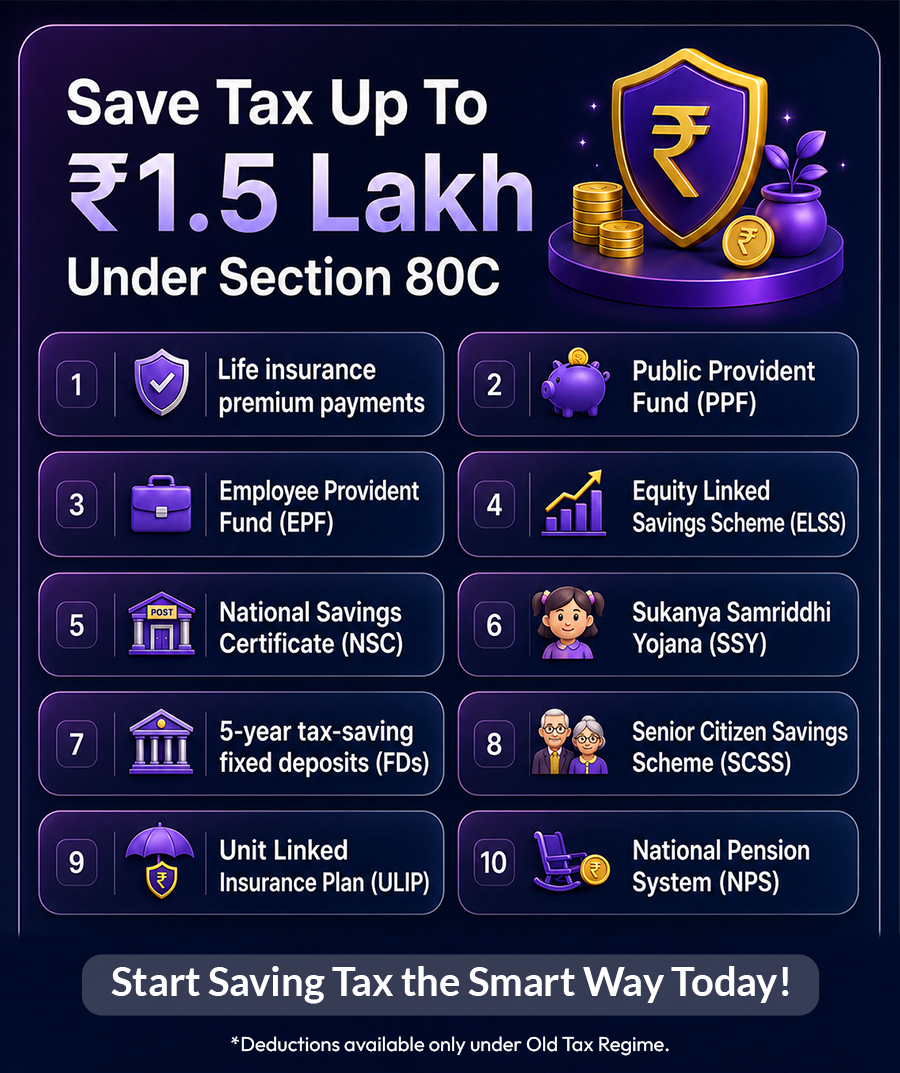
Tax planning is another important element of wealth management. The objective is to reduce tax and to structure financial decisions efficiently while complying with applicable tax laws.
Investment decisions should consider:
- Applicable tax rules
- Tax treatment of different investments
- Income-tax regime applicable to the individual
- Capital gains
- Deductions and exemptions where eligible
- Holding periods
- Tax implications at withdrawal or maturity
Tax laws can change, so current provisions should always be checked before making financial decisions. Importantly, tax-saving investments should also be evaluated for their suitability, risk, liquidity, and alignment with financial goals.
10. Retirement Planning (Financial Azadi)
Retirement planning should begin well before retirement. A retirement plan should consider:
- Current lifestyle expenses
- Expected retirement age
- Inflation
- Healthcare costs
- Life expectancy
- Existing retirement savings
- Expected post-retirement income
- Desired lifestyle
The objective is to build an adequate retirement corpus and create a strategy for converting accumulated wealth into sustainable income. As retirement approaches, the portfolio may need to be reviewed and appropriately rebalanced to reflect the shorter investment horizon and changing risk capacity.
11. Child’s Education Planning
Education is one of the major financial goals for many families. Instead of waiting until the education expense becomes due, parents can estimate the future requirement and start investing early. The planning process should consider: (
- Child’s current age
- Expected education age
- Current education costs
- Expected inflation
- Domestic or overseas education possibilities
- Existing investments
- Required future corpus
Regular investments over a longer period can make the financial burden more manageable.
12. Rbalancing & Re-valuation of Portfolio
A financial plan should never be treated as a one-time exercise. Income, family circumstances, investment values, financial goals, tax laws, and market conditions can change. Periodic reviews can help answer important questions:
- Are investments progressing towards the financial target?
- Has the risk level changed?
- Are asset allocations still appropriate?
- Has income increased?
- Have new financial responsibilities emerged?
- Is insurance coverage still adequate?
- Are retirement goals on track?
Rebalancing may be required when the portfolio moves significantly away from its intended allocation.
Mutual Funds: The Best Investments
1. Diversification
- Diversification is one of the major advantages of mutual funds.
- Instead of investing all money in a single security, a mutual fund can spread investments across multiple securities according to its investment strategy. For example, an equity mutual fund may invest in shares of companies across different industries and market segments.
- Diversification can reduce the impact of poor performance by an individual security, although it cannot eliminate overall investment risk.
2. Professional Management
- Many investors do not have the time or expertise to research companies, analyse financial statements, monitor markets, and make portfolio decisions.
- Mutual funds provide professional portfolio management. Fund managers and their investment teams conduct research and make investment decisions according to the scheme’s objectives.
3. Accessibility
- Mutual funds provide investors with access to different asset classes and investment strategies through relatively accessible investment amounts, depending on the scheme and platform.
- This can make diversified investing easier for many individuals.
4. Goal-Based Investing
- Mutual funds can be incorporated into different financial goals depending on the fund category and investment horizon.
- Potential goals may include:
- Children’s education
- Wealth creation
- Retirement planning
- House purchase
- Long-term financial independence
- Other planned financial objectives
The fund should be selected after identifying the goal, rather than selecting a goal to justify an already chosen investment.
5. Systematic Investment Approach
- A Systematic Investment Plan, commonly known as SIP, allows investors to invest a predetermined amount at regular intervals in an eligible mutual fund scheme.
- SIP can encourage:
- Financial discipline
- Regular investing
- Long-term participation
- Goal-oriented saving
- Cost Averaging – For market-linked mutual funds, investing at different market levels may result in purchasing units at different prices.
Role Of Financial Planner
A professional financial planner can bring structure and discipline to financial decision-making. A wealth planner should focus on the overall financial picture, rather than recommending products without considering the individuals’s circumstances. Good advice should be transparent about potential returns, risks, costs, liquidity, taxation, and suitability.
A financial planner can help investors integrate mutual funds into a broader financial strategy. The process may include:
- Understanding financial objectives
- Assessing current financial position
- Determining risk tolerance and capacity
- Establishing an appropriate asset allocation
- Selecting suitable investment categories
- Creating goal-based investment plans
- Monitoring portfolio performance
- Rebalancing when appropriate
- Reviewing financial goals periodically
The planner’s role should be broader than simply recommending a mutual fund.
Balanced Approach to Wealth Management
Effective wealth management should consider the complete financial picture rather than focusing on one investment product.
- A sound strategy generally begins with understanding income, expenses, liabilities, goals, time horizon, liquidity requirements, risk tolerance, insurance needs, and existing assets.
- Financial plans should also be reviewed periodically because income, family circumstances, markets, regulations, and financial goals can change.
- With disciplined savings, appropriate diversification, risk management, insurance protection, retirement planning, and regular financial reviews, individuals and families can work toward greater financial confidence and long-term stability.
Wealth is a valuable resource, but its true benefit comes from managing it wisely.
- Successful wealth management is not about chasing the highest possible return; it is about creating a balanced financial strategy that helps build, protect, grow, and use wealth responsibly.
The Golden Rules of Wealth Management
A successful wealth-management strategy can be summarized through a few simple principles:
- Start Early: Time can be a powerful factor in long-term wealth creation.
- Save Regularly: Consistency creates financial discipline.
- Invest Wisely: Choose investments according to goals and risk capacity.
- Diversify: Avoid excessive concentration in one asset or investment.
- Protect: Use appropriate insurance to protect income and accumulated wealth.
- Control Debt: Avoid unnecessary and expensive borrowing.
- Plan Taxes: Consider tax efficiency while remaining compliant with applicable laws.
- Review Regularly: Adjust your financial plan as circumstances change.
- Stay Disciplined: Avoid emotional decisions based on short-term market movements.
Conclusion
Mutual funds can play an important role in a diversified financial plan, but they are not risk-free products. Their suitability depends on the underlying assets, investment strategy, time horizon, risk profile, and financial objectives of the investor.
- Equity mutual funds may provide long-term growth potential but can experience substantial market volatility.
- Debt funds may offer exposure to fixed-income markets but can face interest-rate, credit, and liquidity risks.
- Hybrid funds combine asset classes and therefore have their own risk-return characteristics.
- Index funds, ETFs, Fund of Funds, solution-oriented funds, and tax-saving funds serve different purposes and should be evaluated individually.
A disciplined approach of investing should include goal-based investing, suitable asset allocation, diversification, systematic investing where appropriate, risk assessment, cost awareness, periodic review, and behavioural discipline.
— Admin —