

Diversified Investment Options:
Wealth creation is a long-term journey that requires disciplined saving, informed investing, diversification, and patience. Simply keeping money aside may protect liquidity, but investments can provide the opportunity for your money to grow over time and potentially stay ahead of inflation.
There is no single investment option that is suitable for everyone. The right choice depends on your financial goals, investment horizon, risk tolerance, income, liquidity requirements, taxation, and overall financial situation.
A well-designed investment strategy generally combines different asset classes rather than depending entirely on one investment.
1. Bank Fixed Deposits
Fixed Deposits (FDs) are among the most familiar investment options for conservative investors. Under an FD, money is deposited with a bank for a predetermined period at an applicable interest rate. The interest rate and maturity conditions depend on the bank and deposit tenure. They may be useful for:
- Conservative investors
- Shorter-term liquidity requirements
- Liquidity planning
- Capital-stability-oriented allocations
Advantages
- Relatively predictable returns
- Simple to understand
- Different tenure options
- Suitable for certain short- and medium-term requirements
Considerations
- FD returns may be affected by taxation and inflation.
- Investors should consider inflation and taxation when evaluating real returns.
- Investors should also understand applicable deposit-insurance limits and the terms of the particular deposit.
Fixed deposits can be useful for the relatively stable portion of a diversified financial plan, but they may not always provide sufficient long-term growth to meet aggressive wealth-creation goals.
2. Recurring Deposits
A Recurring Deposit (RD) allows individuals to deposit a fixed amount periodically for a predetermined tenure.
- RDs can encourage regular savings and may be suitable for people who prefer a structured approach to accumulating money for specific short- or medium-term goals.
- In RD, growth rates are certain and fixed for known duration and accountable.
- They can be useful for developing financial discipline, although investors should compare their expected returns and taxation with other available options.
3. Public Provident Fund (PPF)
The Public Provident Fund (PPF) is a government-backed long-term savings scheme with defined rules relating to contributions, interest, tenure, withdrawals, and taxation.
- PPF can be useful for investors seeking a relatively stable long-term savings avenue.
- It has a locking period, and investments are eligible for tax relaxation under old tax regime.
- It has specific tenure and withdrawal rules and may not provide the growth potential associated with market-linked equity investments.
- It can potentially serve as part of the relatively conservative portion of a broader portfolio.
- It is often considered by investors looking for a long-term, relatively stable component of their financial portfolio.
- Its long-term nature makes it more suitable for goals that do not require immediate liquidity.
- PPF account can be opened in Nationalised Banks, Private Banks or in Post Offices.
Before investing, individuals should understand the current applicable interest rate, contribution rules, lock-in provisions, withdrawal conditions, and tax treatment.
4. Employees Provident Fund (EPF)
For eligible salaried employees, EPF can be an important retirement-oriented savings mechanism. It encourages systematic contributions during employment and can form part of the retirement corpus.
Employees should understand the applicable contribution rules, interest treatment, withdrawal provisions, and tax regulations. EPF may be particularly useful as a disciplined component of long-term retirement savings.
5. Government Securities (GSEC)
Government securities, including Treasury Bills and other government bonds, represent another category of fixed-income investment.
- GSECs may be considered by investors seeking exposure to sovereign-backed instruments, subject to the specific security and applicable risks.
- Government securities can play an important role in conservative or balanced portfolios.
- These investments are subject to fluctutations in bank interest rates.
However, investors should understand that bonds held before maturity can experience price fluctuations because of changes in market interest rates. The risk characteristics also differ according to maturity and instrument structure.
6. Bonds and Debentures
Bonds and debentures are debt instruments through which investors may lend money to governments, financial institutions, or companies. Depending on the instrument, investors may receive periodic interest and repayment of principal according to the terms. Potential instruments include:
- Government securities
- Corporate bonds
- Debentures
- Other permitted fixed-income instruments
The risks vary by issuer and instrument. Investors should consider:
- Credit quality
- Maturity
- Interest-rate sensitivity
- Liquidity
- Taxation
- Call or Redemption conditions
Higher interest rates may sometimes indicate higher credit or liquidity risk. Therefore, investors should not select debt instruments solely on the basis of the advertised return.
7. Mutual Funds
Mutual funds pool money from multiple investors and invest according to a defined investment objective. Mutual funds can play an important role in long-term financial planning. Depending on the investor’s risk profile and time horizon, portfolios may use different categories of mutual funds.
Potential categories include:
- Equity mutual funds – Equity-oriented mutual funds may provide long-term growth potential but can experience substantial market volatility.
- Debt mutual funds – Debt-oriented funds may provide exposure to fixed-income markets but carry risks such as interest-rate and credit risk.
- Hybrid mutual funds – These are the combination of equities and debt instruments in a definite proportions.
- Index funds – Index funds aim to replicate the performance of a specified market index rather than actively selecting securities to outperform the market.
- Other specilized categories – Such as SIF, AIF, PMS
The selected category should match the goals and risk profile of investor. Mutual funds can be used for different financial goals depending on their investment strategy and risk profile.
8. Systematic Investment Plan (SIP)
SIP is a method of investing a predetermined amount at regular intervals in an eligible mutual fund scheme. For retirement planning, SIP can help establish a consistent investment habit.
Potential benefits of SIP include:
- Regular investing
- Financial discipline
- Long investment horizon
- Reduced dependence on timing a single market entry
- Reduced average cost of investing
However, mutual fund returns are market-linked, and neither SIPs nor mutual funds guarantee profits.
9. Equity Investment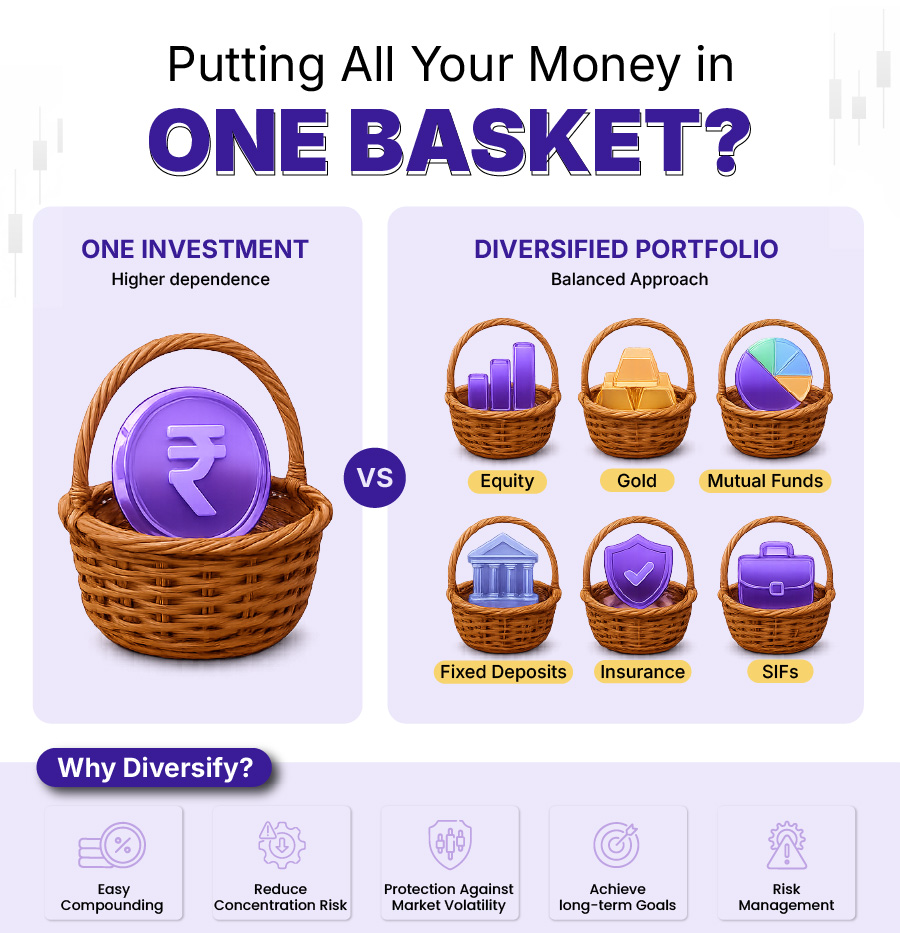
Equity shares represent ownership in companies.
- Equity can play an important role in long-term wealth creation for investors who have sufficient time horizon and risk capacity.
- Historically, equities have provided significant long-term growth potential, but they can also experience substantial declines.
- Therefore, direct equity investment requires knowledge, diversification, research, and risk management.
- Direct equity can offer significant long-term wealth-creation potential because investors participate in the growth and profitability of businesses. However, share prices can fluctuate substantially.
Investors who do not have the expertise or time to analyse individual companies may consider diversified equity-oriented Mutual funds instead, subject to suitability.
Equity investing requires an understanding of:
- Company fundamentals
- Business prospects
- Valuation
- Industry conditions
- Economic factors
- Market risk
Direct equity should generally be approached with a long-term perspective and appropriate risk capacity.
10. Exchange-Traded Funds (ETFs)
Exchange-Traded Funds (ETFs) are investment funds traded on stock exchanges. Depending on the ETF, they may provide exposure to equity indices, bonds, commodities, or other asset classes.
ETFs can provide diversification and exchange-based trading flexibility. Investors should consider:
- Tracking difference
- Liquidity
- Expense ratio
- Bid-ask spread
- Underlying asset
- Market risk
The suitability of an ETF depends on the investor’s objective and the specific ETF.
11. Gold
Gold has traditionally been used as a store of value and portfolio-diversification asset.
- Gold may sometimes be included as a diversification asset.
- It can behave differently from equity and debt under certain market conditions.
- However, gold does not provide regular interest income, and its price can fluctuate.
It should therefore be considered as part of an overall asset-allocation strategy rather than as the sole investment.
However, gold does not generate regular business profits like shares, and its price can fluctuate. Therefore, it is generally more appropriate to consider gold as one component of a diversified portfolio rather than the sole wealth-creation strategy.
12. Real Estate
Real estate is another major asset class used for wealth creation. Residential, commercial, and other forms of property may provide potential appreciation and, in some cases, rental income. However, real estate typically requires substantial capital and involves costs such as:
- Registration and transaction expenses
- Maintenance
- Taxes
- Financing costs
Property can therefore be valuable for diversification, but investors should carefully assess affordability and the ability to hold the investment for the required period.
Real estate may form part of some financial strategies. Potential benefits can include:
- Rental income
- Long-term asset ownership
- Potential capital appreciation
However, demerits of real estate can involve:
- High initial investment
- Low liquidity
- Maintenance costs
- Property-related risks
- Concentration risk
- Transaction costs
- Vacancy Risks
Therefore, property should not automatically be treated as a substitute for a diversified portfolio.
13. National Pension System (NPS)
NPS is a regulated retirement-oriented investment system that allows individuals to build retirement savings through contributions during their working years. It can provide exposure to different asset classes according to applicable investment choices and rules.
Depending on the selected investment structure and applicable rules, NPS can provide exposure to asset classes such as:
- Equity
- Corporate debt
- Government securities
NPS can therefore combine long-term retirement saving with diversified investment exposure. Tax treatment, withdrawal conditions, annuity-related requirements, and other rules should be verified under the prevailing regulations.
14. Senior Citizens’ Savings Scheme
The Senior Citizens’ Savings Scheme (SCSS) is designed for eligible senior citizens and provides a government-backed savings avenue subject to applicable rules.
- It can potentially form part of the income-oriented component of a retirement portfolio.
- It may be useful for eligible individuals seeking relatively stable income from a portion of their retirement savings.
Investors should check the current eligibility, interest rate, deposit limits, tenure, premature-closure provisions, and taxation before investing.
15. Annuities
An annuity can provide a structured stream of income in exchange for an investment according to the product’s terms. Annuities can be useful for addressing longevity risk, because they may provide income over a specified period or for life depending on the product structure.
However, annuities can have limited liquidity and different products have different payout structures. Investors should carefully compare:
- Annuity rate
- Income structure
- Inflation considerations
- Return-of-purchase-price options
- Liquidity
- Taxation
- Nominee/beneficiary provisions
16. Portfolio Management Services (PMS)
Portfolio Management Services (PMS) is a professionally managed investment service designed for investors who seek personalised portfolio management. Under PMS, an authorised portfolio manager manages a portfolio of securities on behalf of the client according to the agreed investment strategy and applicable regulations.
- Minimum investment required in PMS is Rs. 50 Lakhs.
- Unlike pooled mutual funds, PMS can provide greater portfolio customization depending on the specific structure and service.
- PMS may invest in assets such as equities, debt securities, and other permitted instruments, depending on the selected strategy. Unlike a mutual fund, where investors generally hold units of a pooled fund, PMS provides a more individualised portfolio structure for each client.
- PMS can offer features such as professional portfolio management, strategy-based investing, portfolio monitoring, and personalised investment approaches. However, PMS investments involve market risk, and portfolio values can fluctuate.
- PMS is generally suited to investors who understand market risks and meet the applicable eligibility and regulatory requirements.
Important considerations include:
- Investment strategy
- Minimum investment requirements
- Fees
- Portfolio concentration
- Liquidity
- Tax implications
- Historical performance
- Risk characteristics
Past performance should never be treated as a guarantee of future results.
17. Specialized Investment Funds (SIFs)
Specialized Investment Fund (SIF) is a regulated investment product that provides investors with investment strategies that may be more specialised than those generally available through conventional mutual fund schemes. SIFs are designed to offer greater flexibility in portfolio construction and investment strategies, subject to the applicable regulatory framework.
- Minimum investment required is Rs. 10 Lakhs
- Depending on the SIF strategy, investments may be made across permitted asset classes and securities, with the objective of following a defined investment approach.
- SIFs may be considered by investors seeking a more specialised investment solution and who understand the associated market risks.
- SIF can be considered as one component of a diversified investment portfolio, depending on an investor’s individual circumstances.
Before investing, investors should consider their financial goals, risk tolerance, investment horizon, liquidity needs, investment strategy, costs, and applicable eligibility requirements.
18. Alternative Investment Funds (AIFs)
Alternative Investment Funds (AIFs) are privately pooled investment vehicles established to invest in a defined investment strategy and are regulated under the applicable SEBI framework in India. AIFs can provide access to investment opportunities and strategies that may differ from those typically available through conventional mutual funds.
- Minimum investment required in AIF is Rs, 1 Crore.
- AIFs are broadly classified into Category I, Category II, and Category III, with each category covering different types of investment strategies and structures.
- Depending on the category, strategy and fund’s mandate, an AIF may invest in areas such as start-ups, private companies, real estate-related opportunities, venture capital, debt instruments, equities, or other permitted investments.
- AIFs may offer portfolio diversification and access to specialised strategies, but they can also involve higher complexity, market risk, liquidity risk, and other investment-specific risks.
AIFs may provide diversification and access to investment opportunities unavailable through traditional products.
However, they can involve:
- Higher complexity
- Limited liquidity
- Higher fees
- Longer investment horizons
- Significant investment risk
They are generally more appropriate for investors who understand these characteristics and meet applicable eligibility requirements.
19. Commodities
Commodities such as gold, silver, energy products, and agricultural commodities can be influenced by global supply and demand, geopolitical events, currency movements, and economic conditions.
Commodity exposure can provide diversification, but prices can be highly volatile.
Investors should distinguish between long-term strategic exposure and speculative trading. Derivative-based commodity strategies can carry particularly high risk and complexity.
18. International Investments
Investors may also seek exposure to international markets through permitted investment avenues. International diversification can provide access to companies, industries, and economies outside the domestic market.
However, international investing introduces additional considerations such as:
- Currency movements
- Foreign-market volatility
- Regulatory differences
- Taxation
- Country-specific risks
Such investments should be considered within applicable laws and regulations and as part of an overall asset-allocation strategy.
Choosing the Right Investment
There are numerous investment options available for individuals seeking to grow and manage their wealth. From fixed deposits, PPF, government securities, bonds, and mutual funds to equities, gold, real estate, PMS, SIFs, AIFs, and international investments, each option has its own characteristics, benefits, limitations, and risks.
The right investment is not necessarily the one offering the highest potential return. It is the investment that fits your financial goal, time horizon, risk tolerance, liquidity requirement, and overall financial plan.
Consider the following question while selecting the best investment option –
- The most important question is not “Which investment gives the highest return?”
- The better question is: “Which investment is appropriate for my goal, time horizon, and ability to take risk?”
Different investment options have different features. For example:
| Financial Requirement | Possible Investment Approach |
|---|---|
| Emergency Reserve | Highly liquid and relatively stable options |
| Short-Term Goals | Suitable low-volatility instruments |
| Medium-Term Goals | Balanced combination of suitable assets |
| Long-Term Wealth Creation | Diversified growth-oriented investments |
| Retirement | Goal-based diversified retirement portfolio |
| Wealth Preservation | Appropriate mix of stable and growth assets |
| Diversification | Combination of suitable asset classes |
The actual choice should depend on individual circumstances.
Conclusion
Successful wealth creation requires patience and discipline. Investors should avoid making decisions based solely on market trends, past performance, advertisements, or promises of high returns.
A well-structured financial plan should combine saving, investing, diversification, risk management, insurance protection, tax considerations, and regular portfolio reviews.
Ultimately, wealth creation is a marathon—not a sprint.
Start Early. Invest Wisely. Diversify. Stay Disciplined. Give Your Wealth Time to Grow.
Disclaimer: This article is intended for general educational and awareness purposes only and should not be considered personalized investment, financial, tax, or legal advice. All investments are subject to applicable risks, terms, conditions, and regulations. Market-linked investments can lose value. Investors should assess suitability and conduct appropriate due diligence before investing.
— Admin —